Wednesday, February 20, 2013

Dala Horse Post Cards


   I was so happy today that my dala horse post cards came back from the printer! These cards feature two of my own paintings with a blue and white dala and a pink and red dala. They are now available in my etsy shop!

Thursday, February 14, 2013

Happy Valentine's Day!


May your day be filled with romance!

Glad Alla hjärtans dag!

Sunday, February 10, 2013

Artist Spotlight: Woodland Jewelries

  Today I am so pleased to introduce you to a lovely young woman and talented jewelry maker, Delila of Woodland Jewelries. Originally from Finland, Delila recently moved to England to pursue her passion for plants and now works in a beautiful English garden. You can read all about her adventures in nature and jewelry making at her beautiful blog, The Acorn Gatherer. However, here on the blog she has come to visit with us and tell us about her beautiful creations, inspirations, and the things that she loves....


Name: Delila Jemaiel
Business: Woodland Jewelries
Website: acorngatherer.blogspot.com andwoodlandjewelries.etsy.com

Tell us a little about yourself: 
I am a Finnish gardener and jewelry maker living in England. At the moment i am an trainee/worker at the magical Nymans garden. For many years i dreamed that i could live in England and that happened last autumn. In my free time i love to wander in the woods, be with the trees and observe nature. Beatrix Potter, Victorian era, tea, fairy tales,... are close to my heart also.


What inspires you to create your beautiful jewelry pieces? 
   The lovely woodland and forest creatures. Fairy tales, fairies and art inspire me also. Sometimes i may see a movie like a Bright Star or Miss Potter, which inspires me. Inspiration comes in phases, at some moments i may make a collection of jewelries with a same theme, like a twilight woodland. Seasons change the colors of my work. Sometimes i may see a photograph, or a painting which inspires me. But mostly i am inspired by the surrounding nature. 


How has moving from Finland to England influenced your art?   I make my jewelry in the same way I did before, but the themes may have changed. I am able to see deer here every time i wander in to the "deer woods", so the deer appear in my work all the time. I am inspired by the local flora and fauna... i would love to make jewelry with badgers on it! Some wild plants, which do not grow in Finland's nature inspire me: mistletoe, ivy, bluebell, snowdrop. 


What are your favorite things to create jewelry from? 

  Crocheting scalloped chains, Something i began to do two years ago- I still keep crocheting these chains. I have never been able to follow patterns, so i wanted to crochet something simple, which i could use on my jewelries. Making things of my own gives a more unique touches on to my work, like making air clay acorns and birds. I do love to sew and use ragged ribbons. I try to find a real looking nature themed brass charms, like deer's, squirrels and pine cones. Different beads like Picasso, Czech glass beads, semi precious stone nuggets. 


Do you have any special projects coming up for spring or for 2013 in general?    I am trying to learn how to crochet an oak leaves which i could use on my bracelets.
A few shops have been asking to sell my jewelries here on England, which is wonderful! Making the jewelries for the shops will begin soon. 

Travelling to the Lakes in this spring to see Beatrix Potter's Hill Top once again would be wonderful. It is one of the dearests places to me.


*********************************************************************

   Thanks so much Delila for taking the time to chat with us here about her beautiful creations! And please, take a moment to visit her blog and shop, to see what goodies you might like for yourself! All images used with the permission of Delila Jemaiel of Woodland Jewelries

Monday, February 4, 2013

The Nielsens & Olsons: Portrait of a Norwegian-American Family

Mikal Nilsen
 The following is a post written by contributor Winnie Nielsen. In it, she will trace the journey of her husband's Norwegian ancestors to America, and explore how they retained their Nowegian roots in some ways, and became American in others. She is also kind enough to share a family recipe with us! Thank you so much, Winnie!~


The Nielsens & Olsons

By Contributor Winnie Nielsen


    My husbands' Norwegian family story begins in Sandar Sondefjoprd, Norway with the marriage of Nils Andreasen and Maren Pedersdotter in 1852. They were a farming family and the 1875 record showed that the year produced 1/4 ton barley, 1 1/2 ton oats, and 3 tons of potatoes.   They had 6 children and their fifth son, Mikal Nilsen, was born in 1864.

Amunda Nilson
    Mikal Nilsen immigrated as a young man to American in March 1887 on the vessal named Thingvalla.  His passenger ticket was number 355 and they landed in April in New York City.  He worked as a laborer and went back in in 1894 and married  Amunda Anderson( born in Tonsberg, Norway in 1866).  He returned to American and she joined him one year later.  During the US census of 1910, both Mikal and Amunda were US citizens living in Brooklyn N.Y. Mikal was employed in an asbestos plant and they both could read, speak and write English.


Mikal and Amunda Nilsen and child


    Mikal and Amunda's seventh son was Arthur Nielsen.  Nilsen was changed to Nielsen when Mikal immigrated.    Arthur met and married Kathleen Olson in Brooklyn N.Y. in 1942 during World War II.

Marthilde Olson
    Kathleen, was from an immigrant Norwegian family who was also living in Brooklyn , N.Y.  Karl ( Haukas) Olson, born 1881, married Marthilde Gabrielle and they immigrated to Brooklyn N.Y. in 1905.  Karl named himself Charles (Charlie for short) here in the US.  He worked as a high skilled ship mechanic on boats in the New York Port.  Marthilda worked as a domestic for a wealthy  family.  Together they had two children: Kathleen and Oweida Ethel.
Charles Olson

Charles and Marthilde
    Kathleen and Arthur had two children : Warren Charles and Susan Lynn.  Arthur served in the US Navy in the Pacific during WWI and was a career enlisted man residing most of their married life in Norfolk, Virginia.  Kathleen stayed at home while her children were small but eventually entered the workforce in office support roles.

    Like many Norwegian immigrant families, the Nilsens and the Olsons, came here to seek a better life with the many work and life opportunities that were not available to them in Norway.  They were regarded in the US as  hard working and highly skilled. They  banded together in the Brooklyn ,N.Y,  Norwegian community supporting one another and helping new family members come and get established. They worked hard to learn the language and American way of life.     
      By the time Kathleen and Arthur grew up, they did not speak Norwegian and were fully   westernized with friends and life in American public schools.  They saw themselves as Americans first and Norwegian second.  Warren's family grew up on the naval base in Virginia and the traditions of the Old Country became more faint as the years passed.  But true to many second and third generation Norwegians, what did survive were favorite recipes.  Marthilda was known for her delicious waffles, which were made with lots of eggs and fresh ground cardamon.  Kathleen carried on that tradition with her grandchildren and whenever she visited, she made Nana Olson's waffles.  My children loved them as well as their cousins. 
Kathleen and Arthur with their children


Nana Olson's Waffle recipe here:

2 C regular flour
1/4 cup sugar
1/2 tsp salt
1 1/2 tsp baking powder
3/4 tsp ground cardamon
1/4 C melted butter
3 eggs
1 tsp vanilla extract
1/2 - 3/4 cup milk or enough for a thick batter depending on the size of your eggs.

Mix all ingredients together and cook in a waffle maker till golden brown.  Serve immediately with butter and warm syrup. Delicious!!

   America was the melting pot for so many countries.  Scandinavian immigrants took many pathways to a new life here.  Some went west to homestead on the prairie while others congregated in cities and applied their skills to the labor force.  Today, they look back with pride at what their great grandfathers and grandmothers did to make life better for themselves and their children.  The joined the many other immigrants who helped build this nation and shared their love of their homeland with neighbors and friends.  For the third generation family of these Norwegian immigrants, I would say they sweetened the effort one delicious waffle at a time!

Art on Display


  Hello there, my friends!~
   Just wanted to pop by and let you know that I have many pieces of my original art plus some prints now on display and ready to buy at Shades of Brown Coffee and Art in Tulsa, Okla. This includes many of my Scandinavian themed pieces such as The Norwegian Bride, Lars, and Deep in the Winter Wood. If you're in the area, I'd love for you to stop by! And get one of their amazing coffees while you're at it!

Saturday, January 26, 2013

Book Review: Keeping Christmas, Yuletide Traditions in Norway and the New Land

   Written by Contributor 
Winnie Nielsen

    I have been joining Heather this past Christmas season with some reading on Scandinavian culture.  Since my husband is 100% Norwegian, I decided to read Keeping Christmas: Yuletide Traditions in Norway and the New Land  written by Kathleen Stokker.  The book was full of the historical Christmas celebration in the Old Country, and how it was changed by immigrants coming to America as they blended in with their new surroundings.

     Christmas was primarily  a religious celebration.  It was comprised of a special meal on Christmas Eve with specific prayers, the reading of Bible verses, and singing of hymns.  The meal was celebratory and followed by the opening of a few  handmade gifts.  

      The celebration included many special foods spread on the table dressed in the best tablecloth available. It was the true smorgasbord which everyone looked forward too.The family gathered round together to hear the traditional readings and sing together while savoring the bounty of special dishes reserved for the occasion.  Christmas Day was celebrated with a traditional early morning  trip to church for a special service.

     The Norwegians spent the late fall months, following the harvest, with preparing for the Christmas Eve celebration. Chores included the butchering of hogs( for the traditional roast pork dinner and special sausages), the making of plenty of candles from the tallow, the brewing of homemade beer, and  right before Christmas, a thorough cleaning of the home from top to bottom.  Right before Christmas Eve, special curtains or wall hangings were then placed, fresh straw was laid on the floor, a special tablecloth was laid on the table,  and early in the day of December 24, everyone received a hot bath and was scrubbed from head to toe.  Then,  new fresh clothes were put on for the special Christmas Eve celebrations.  Cleanliness was considered mandatory to prepare for the feast and most important celebration of the year. Early celebrations did not include a Christmas Tree. 
 
      Christmas trees came to Norway and to the US from immigrants of German descent.  Original celebrations were focused on the religions traditions, the special foods,  a few  homemade knitted gifts, or  sometimes  small children were given handcrafted toys made out of wood or a cloth doll for a girl.
Norwegian winter post card, SOURCE

      Christmas Day, after church, was a time  to visit with friends or receive friends at home.  Sharing coffee and special cookies and other foods were important as a way to show appreciation and thanks to neighbors and friends.

    Norwegians also had a custom called Julebukking,   which reminded  me of our Halloween traditions. The week after Christmas , people dressed up in scary costumes and went from door to door seeing if people could identify them. Those who played along invited the dressed friends inside for cookies and other treats.  Sometimes the Julebukking ended up in mischief and Americans found the tradition distasteful.  They pushed back on the immigrants with such disfavor that the tradition was dropped as fewer and fewer people participated or were unwelcomed in neighborhoods.  What was interesting to me was how superstitious the Norwegians were about Christmas. 

    Like early Halloween and Samhain celebrations, people worried about evil spirits troubling them on Christmas Eve and special efforts were taken to appease spirits who might be about the home and farm.  For Norwegians, Christmas Eve was the time when the veil between the living and the dead was the thinnest.  Julebukking was the effort to make fun of and taunt others about lurking unwanted spirits at their doors!  In addition to wandering sprits, appeasing the "Nisse" who lived on the farm, was also important. Nissen, the legendary elves, were thought to live among the farms and were responsible for ensuring that nothing bad happened to the animals or the farm.  They did, however, expected a Christmas treat in return for their services,  so a bowl of Christmas Porridge (flotegrot) was always promptly left out on Christmas Eve.

     As the tradition of the Christmas Tree grew in favor with Americans, it became part of the celebrations at churches and schools.  Norwegian children, who attended the public schools, were exposed to the growing favorite tradition.  Since schools were so central to immigrant communities, the annual school Christmas pageant, became an important holiday tradition to the families.  The pagent included  a big Christmas tree and all the children received a little gift at the end of the school program.    Lutheran churches also added  a celebration at the home of the pastor around a big Christmas Tree as part of the festivities.  By the time of World War I, Christmas trees were becoming important in the pageantry and the immigrants found that they were something worth adding to the traditions of the Old World.  The children really pushed the idea of a tree at home as well.

     The idea of Santa Claus entered the American scene in 1834 with the famous poem of The Night Before Christmas.  Again, the idea of children getting gifts that had to be bought in stores was alien to Norwegian immigrant thinking. Norwegians held fast that the primary focus of Christmas should be the Old World traditions of the  prayers, hymns, and foods of the Christmas Eve celebration.  Slowly, however, as children were more exposed to American traditions in their schools and churches, and once married moved away from the farms to cities, the acceptance and embracing of store bought gifts and Santa Claus became woven into their own family celebrations.

      World War II, brought a huge surge of patriotism in the US and immigrants joined in to embrace the efforts and wanted to be seen as patriotic in their new land.  With that came even more acceptance of the American way of life and families were less inclined to stress speaking and acting in ways that separated them from other Americans.  

   
   And in Europe, with the Nazi 5 year occupation of Norway, German Christmas customs of Advent Calendars and Christmas trees saturated the cultural markets resulting in more Norwegians adding those traditions to the traditional ones.

     It seems that as the immigrants melted into the melting pot of America, the Christmas traditions that were most preserved were those of serving special foods.  In the early 1970s, young people wanted to know more about their roots and selected those traditions from the Old Country that seemed best for them.  There was a resurrection of the popularity of Lutefisk, special breads and cookies, and the singing of old hymns again.  Families added these elements back into their existing American Christmas traditions to teach their children about their Norwegian heritage.  Today, immigrant communities share Lutefisk dinners, St. Lucia festivals, and bakeries full of long time favorite cookies like Pepperkakor, Sandbakkels, KrumKake, and Julebrot.

      Keeping Christmas is a fascinating read about the immigrant experience of finding a new home in America while striving to maintain the pride of their Norwegian heritage. It was not an easy transition and many immigrants moved to the unsettled prairies of Kansas , Oklahoma, Nebraska and Iowa to homestead. They endured many hardships of getting established and growing sustainable communities.  Christmas was the one celebration that brought everyone together in thanksgiving to celebrate their heritage. In enjoying the Old World traditions, a much needed winter respite occurred.  The sharing of familiar foods and traditions renewed their ties to one another and lifted their spirits that coming to America was worth the hard work and leap of faith that was taken to leave their beloved Norway.

Thursday, January 24, 2013

Dala Horse Art


I thought I'd share with you my little dala horse paintings! My plan is to make a card set out of these designs. I've had so much fun thinking up different ways of decorating the dalas, and the blue and white one was inspired by my love of blue and white dishes. I've always loved drawing and painting twisting vines, curly ques and graduating dots. I was so pleasantly surprised to discover that all of these motifs I've been doodling for years are all strong design elements in Scandinavian folk art.

I'll be sure to share here when I get the postcards made, and perhaps some prints. I think these dalas will be perfect for spring!~

Tuesday, January 22, 2013

Book Review: Carl and Karin Larsson, Creators of the Swedish Style


    Not long ago I ordered the book Carl and Karin Larsson: Creators of the Swedish Style through Amazon from a used book source. I was so excited to find a book about one of my favorite artists, Carl Larsson, and his wife Karin and their epic collaboration of their famous house, Lilla Hyttnas in the village of Sundborn, Sweden.

   This book is so fascinating because not only is it a book about their home-- it is a book about their life together, their creations and art, and how the making of their home and their family took on a unique role in Larsson's artwork and the image of Swedish design. For Swedes, the art of Carl Larsson in many ways depicted the ideal home life and encouraged an appreciation for warmth and family friendly rooms.


   I wasn't quite sure what to expect when I ordered the book online, but I was very happy with the heft and depth of the volume! There are hundreds of full color high quality photos and reproductions of Larsson's prints. I loved seeing photos of the actual real-life rooms set beside Larsson's illustrations of the same space. As an artist, seeing this gave me a deep appreciation of how Larsson was able to convey the essence of the room in in his watercolors, and how easily he created stories and movement with the figures he painted within them-- usually his family.


  It was also good to read more about Karin and her contributions to the vision of the home and her own artistry. When Carl and Karin met, she was also a painter. As a modern woman, mother and artist, it does make me sad to read that, once they started having children, Karin's painting came to an end.
   But looking at her home, and reading about the joy she took in designing everything from clothes to furniture to textiles, I think it's safe to assume that Karin didn't 'give up art', but found different outlets for her artistic talents, and those outlets were deeply rooted in and inspired by motherhood.


   Without a doubt, this book left me with an even deeper appreciation for this unbelievably artistic duo and their biggest work of art-- their home. I love all the detail that they put into each room-- painting on the walls, rooms filled with handmade things, and creating beautiful and inviting spaces in which they raised their children and also inspired their nation.
   Even today, the richly folk art and bright style of the Larsson home and Carl Larsson's paintings inspire decorators and home owners around the world and can be categorized as it's own unique style.
   I would definitely recommend this beautiful book to all lovers of Larsson, Swedish style and folk style in general. Especially on a dark winter's day-- whether you're in the frozen north or just the chilly suburbs, this is a warm and cozy read!

~Heather

Friday, January 18, 2013

Music: First Aid Kit

Today I wanted to share with you one of my favorite singing duos-- the sisters Johanna and Klara Soderberg from Sweden, known as First Aid Kit. Their close melodies and folk style are just beautiful and mesmerizing and they've been compared to another one of my favorite bands-- Fleet Foxes. In fact, it was a cover of a Fleet Foxes song posted on the internet that first gave the sisters international attention:


  And while this is an amazing cover, their original music is just as beautiful and lovely-- and it's also in English. First Aid Kit's latest album, The Lion's Roar, is a folky feast of bittersweet songs, that are shockingly mature for such a young pair, but their voices make it feel true and honest.

This is my favorite song from the album, called "Emmylou" it is remarkably 'Americana' and country sounding-- even featuring mentions of American legends 'Emmylou', 'June', 'Johnny' and 'Graham.'

I highly suggest giving them a listen and I look forward to many more future albums from these girls~
~H

Saturday, January 12, 2013

My Art: Norwegian Bride

   I thought I'd share with you all one of my latest Scandinavian paintings--- this piece is called "Norwegian Bride" and shows the traditional Norwegian wedding costume and crown in an old fashioned folk style. I'm pleased with now it turned out and went a bit crazy with the flowers, haha!

  You can read more about the piece and the tradition of Norwegian wedding crowns HERE at my art blog.

Hope you have a great weekend!
Heather

Thursday, January 10, 2013

Vintage Norway


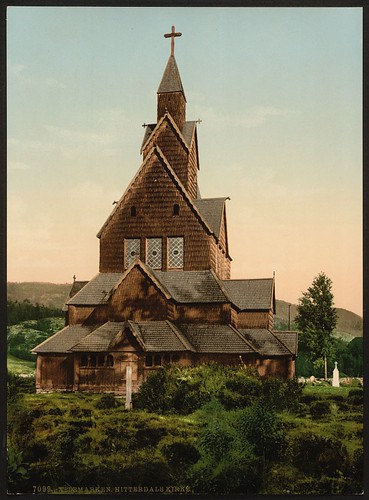
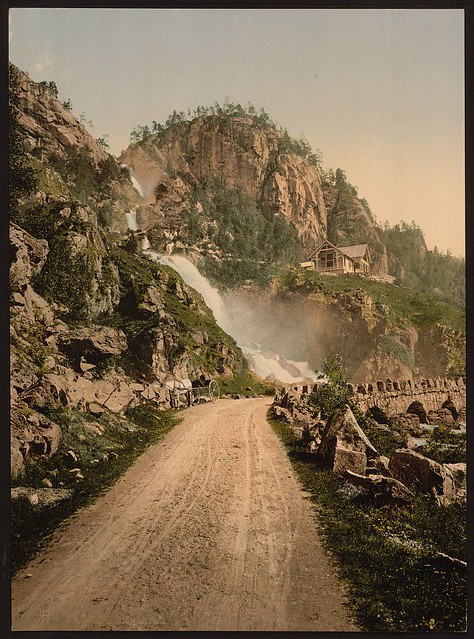
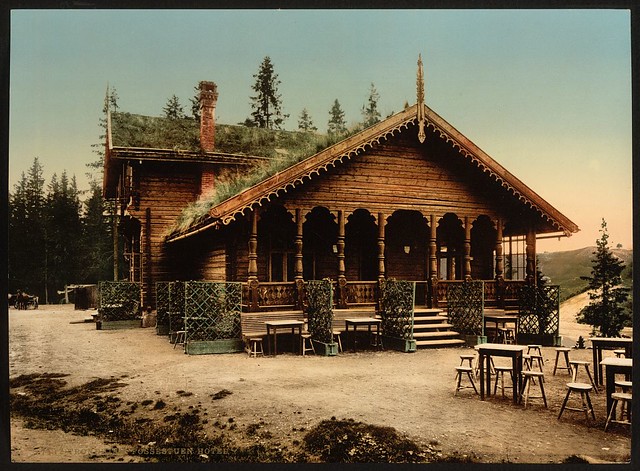
    I've been looking through the flickr commons at copyright free images of Norway and came upon these vintage beauties. What a majestic country! I'd love to see the fjords some day. Take a look at these amazing photos. You should be taken to the flickr source with more info by clicking on them:


 Which scene do you wish you could step into? I can almost hear all that rushing water. And aren't the sod roofs amazing? I've read that many scandinavian homes insulated their roofs with layers of sod and turf to keep cool in the summer and warm in the winter. They would plant gardens and even small trees on them. Now that's a great use of space!

Thanks for your visit!~
Heather

Monday, January 7, 2013

My own Dala....


I've started working on a series of Dala Horse designs-- come check it out on my art blog-- Audrey Eclectic!

Sunday, January 6, 2013

A Swedish Epiphany


  Happy Epiphany, dear readers! Hope you're having a wonderful Sunday. I thought I'd share with you this beautiful Swedish tapestry depicting the nativity with the three wise men by Anders Eriksson, 1802. Thanks to Aputsiaq at Nordic Thoughts for the source!

Also--- we have a winner for our book giveaway! Congrats to Nancy, for your win! And thanks so much to our author, Linda K. Hubalek for being so generous!

Til next time,
~Heather

Saturday, January 5, 2013

Obsession: Scandinavian Box Beds

   SOURCE

There is something just so interesting and a bit romantic about box beds, and Scandinavia has some of the most beautiful varieties. Built into the wall, sometimes with a curtained off entrance or even an entrance with doors, I have loved these unique style of beds since I was a kid.
    The concept behind the box bed is to preserve heat and add privacy. They often times also included storage of some sort either beneath the bed or along the wooden sides.
   In the years when most people shared sleeping space with the whole family, having a private box bed was probably very ideal. Especially in the frigid winters of northern landscapes-- I can just imagine how warm and cozy these beds must be all piled up with blankets and furs, the curtains drawn and a good book in hand.
   I've been gathering some images of some particularly beautiful box beds for that 'some day' house of my dreams. I thought I'd share them with you here-- what do you think? Are you a fan? Or would you feel claustrophobic? I just love how beautifully and ornately some of the beds are decorated. They are many times a work of art in of themselves!


Thursday, January 3, 2013

Gott Nytt År!

Young folk dancers from Lindsborg, Kansas at their annual Lucia Fest
Happy 2013! So glad to have you here at Scandinavian Folk. This blog is pretty new, but I hope to have it packed full of fun Scandinavian tidbits as the months go on. You can look forward to lots more book reviews, recipes, design, art and other things inspired by Sweden, Norway, Finland, and even Denmark and Iceland.
    Since I'd like for this to be a very interactive site, I also welcome guest posts if you have something you'd like to share! I'm also very interested in the immigrant aspect of Scandinavian culture-- you don't see too terribly much about that online. But America also has a very rich and vibrant Scandinavian culture and heritage, and I'd love to celebrate that as well.

   And speaking of great immigrant stories--- don't forget that a free eBook of Linda K. Hubalek's "Butter in the Well" is up for grabs in our latest giveaway! See THIS POST for more info! Contest only lasts until Jan. 5!
   Thanks again for joining me here--- we'll have a marvelous time!~
Happy New Year-
Heather

Friday, December 28, 2012

Butter in the Well: A review, and interview and a giveaway!

   Earlier this year a friend of mine gave me some books, knowing that I am into all things prairie and Swedish and pioneering. 
In the pile of good reading was this slim volume by Kansas author Linda K. Hubalek, "Butter in the Well."
     I found this book very intriguing on many levels--- not only is it written in a diary style that covers 20 years of a Swedish immigrant woman's life on the Kansas prairie-- but the people and places are actually historically true. And in a twist of fate most intriguing, the author grew up on the same farm and in the very house that Kajsa Svensson Runeberg and her family built and lived in for many years. This unique and intimate connection to Kajsa's story and the very land she struggled to make into a home has made Linda's book all the more poignant and real.
    The story begins in 1868, when young Kajsa and her husband Carl Johan and their baby Anna Christina are journeying from Illinois (where they lived for a year after initially arriving from Sweden) to the rough and foreign terrain of central Kansas. The Svensson family tackle almost unimaginable obstacles-- living in a crude earthen dwell dug out of the ground, struggling with the climate, the wild animals (including snakes falling through the sod ceiling!) and building their lives and identities in a new land.
   Kajsa's quiet fortitude in the face of great joy and great sorrow is admirable, and also makes one realize how much our ancestors struggled with in order to survive and thrive in the New World.
   Kajsa's story is amazing in it's quiet simpleness, and I couldn't help but admire her for her fortitude, faith, and ability to keep on going when it seemed almost impossible to do so.
   Ultimately, Butter in the Well is a story that anyone with an interest in pioneering, prairie culture, and Scandinavian immigrants will enjoy. 
   The book is also filled with great family photos of Kajsa and her home and family, maps and even some recipes.
    It is also just the first in a series of books that the prolific author has written, and I can't wait to delve into her other books! 

    Not too long ago I had the pleasure of chatting with Linda K. Hubalek about her books, and she was kind enough to answer a few of my questions I had after reading Butter in the Well.
   I thought you might like to hear some of her great answers, and learn a little more about what went in to writing such a unique book:


    How did you first come to learn about Kajsa and the family that built your home and originally
settled your childhood farm? Was it part of your childhood, or something you researched as an
adult?

Linda: Kajsa’s (and her sibling’s) descendants lived around our farm, so I knew them growing up. Kajsa’s daughter Julia married the boy next farm over and was like a grandmother to me.
    Over the years Julia gave me things to play with or keep, and as I worked on Kajsa’s book I realized they had been a part of the first pioneer family’s life.
   Julia gave me an old paper tree to put in my playhouse. When I started working on the book I realized it was their ljus korna! (I still have a cluster of tiny glass bulbs that had been fastened to the tree.)
   A quilt she gave me was an 1890’s crazy quilt, sewn and quilted in the house I grew up in, and which Kajsa would have helped made.
    Kajsa’s youngest daughter Mabel had a camera in the early 1900’s and family members shared photos with me. Photos in the house and around the farm put their family in the same place I spent time, only in a different decade.
   So many little things like what I’ve mentioned have tied me to Kajsa and her family while I was growing up, and still do now fifty years later.

2. What inspired you to tell Kajsa's story in diary format?
     My mom gave me a diary for Christmas the year before I was married so I could record my wedding plans. I used it to write about my daily life, and have been doing it now for 36 years.
    When I first started working on the Butter in the Well book, I only have bits and pieces of
Kajsa’s life, so it was easy for me to write her story as diary entries.
  And I don’t like to write dialog- so I write my books more as an insight into the character’s
feelings instead of interacting with other people.

3. What was it about Kajsa as a historical figure and a character that made you want to tell this pioneering story through her perspective?
   I was researching my Swedish Johnson side of the family, but didn’t find much information on their journey to Kansas or their first years on their homestead.
   Then I realized I had a wealth of information on Kajsa because of me growing up on her
homestead, and the neighborhood connection. It just fell in place to write her story because I
could feel the ties and emotions we both had to the same place.

4. In your opinion, what abilities or attributes made Swedish (and Scandinavian settlers in general) succeed in taming the prairie?
    Our community was started by Swedish farmers coming for land, so they knew they were
starting from scratch, plus they had the knowledge to build their homesteads and grow crops.
    I’ve been to Sweden and seen where my ancestors first lived. The scenery happens to be very similar to our part of Kansas, but the weather, especially during the summer, would have been a major adjustment for them. Luckily the Swedes came to this area in groups, or came to join other family members or friends, so there was a network of support for each other.
   In most cases the Swedish immigrants spent all their money getting here, so were forced to make it work. We joke now that we’re “stubborn Swedes” but that was a trait that helped the first Swedes in the area to survive and thrive on the Kansas prairie.


***************************************

  I have great news for you now, my readers! Not only is Linda's book available to purchase online, but she has generously donated a FREE Kindle eBook edition of her book Butter in the Well to a lucky reader here at Scandinavian Folk! All you need to do is a leave a comment here on this post. And if you share the review and giveaway info on your own blog or facebook, feel free to post here again to let me know and increase your chances of winning! This giveaway will be open through JANUARY 5, 2013! 

And of course---Thanks SO much to Linda as well for her generosity and the time she took to talk with me and such a great interview!

Happy a happy New Year! And thanks for stopping by!~
Heather


Tuesday, December 25, 2012

God Jul!

A very merry Christmas and God Jul from Scandinavian Folk!

Wednesday, December 19, 2012

Review: Sweet Land


     A while back I found a wonderful independent film that I can't say enough good things about. It's called Sweet Land and it is gorgeous and simple, and story that threads its way through love and generations and family. It's one of my favorites.
   The film was written and directed by Ali Selim, and adapted from a short story by Will Weaver.
    The film opens with Lars sitting at the bedside of his dying grandmother in present day Minnesota, and briefly explores his emotions and trepidation at selling his grandparent's farm to housing developers.
    Much like "Up", this film will get you all sobby early on, but quickly you will be thoroughly entertaining and uplifted for the duration of the film. After a brief touch on modern times, the film travels back in history, first to the 60s when Lar's grandfather dies and his determined grandmother insists that they bury him in the dead of night out in the middle of the family wheat field. "He stays here," Inge, the grandmother, says firmly.

    The film then tracks back even farther, to 1920s Minnesota, a place where The Great War is still fresh on everyone's mind and Inge (Elizabeth Reaser) comes by train, to enter into an arranged marriage with Nowegian immigrant, Olaf Torvic (Tim Guinee).
    Although the marriage has been arranged in Norway by Olaf's parents, it is soon learned, to everyone's dismay, that Inge is German.

   After Inge nervously chatters in German at the alter of the little Lutheran Church where she has come to marry Olaf, the preacher refuses to marry them, and the sweetly awkward love story between two strangers begins.
    When it seems no one in the state of Minnesota will marry Inge and Olaf because it's feared she's a degenerate German spy-- Inge goes to live with stoic and silent Olaf's funny and eccentric neighbor and best friend, Franzen, Who is played by the amazing Alan Cumming. Franzen and his wife are very much in love, and have a house full of children to prove it. But soon Inge is longing to start her own life with Olaf on their own farm, and makes herself quite at home in his beautiful little white farm house, much to the horror and gossip of the community around them.
    Slowly though, Inge becomes part of the community and her relationship with Olaf develops at a slow and beautiful pace. The era in which this story is written, and the area in which the story is set, is unique and a treasure to explore. The community is still very rural, settled by many of immigrant backgrounds who are all trying their best to 'be American', but also at the cusp of modernization-- for better or worse.
   The beginning of farmer unions is touched on here, as well as the trap of getting mired in depth for the sake of 'improving the farm' that many farmers fell victim to. Olaf says many times "business and farming don't mix" and by the end of the film, you will agree with him.

    If you have netflix, Sweet Land is currently available for instant viewing, although I think this is a film that more than earns its way into a permanent place in a movie collection. It is simple, sweeping and beautiful, capturing the American prairie in all its glory and making us all look back a little at the immigrants-- and the love stories-- that came before us.

~H

Monday, December 17, 2012

Kringler Recipe


     I had my first Kringler not too long ago and I guess you could say...I am a fan. So far I've made two batches. I've used an ungodly amount of butter. And I'm not a bit sorry. 
   The recipe I initially used seem to come out a little uneven--- too much topping for the crust that was made, so I modified it to make a large pan (share with your family and friends!) because really, isn't more better?

   This is the recipe as it stands now, and I hope you get to try it with a hot cup of coffee! It's pure heaven:

Ingredients:

Crust:
2 cups flour
1 cup (2 sticks) butter
1/4 cup water

Custard middle:
1/2 cup (1 stick) butter
1 cup water
1 cup flour
3 eggs
1 teaspoon almond extract

Top glaze:
1 cup powdered sugar
1/4 teaspoon almond extrant
1.5 tablespoons milk

sliced almonds for garnish

Start with the crust:
Combine the flour and butter with blender. Add the water and blend until smooth. Using a greased cookie sheet, (I like to line mine with foil for easier clean up) and pat and spread the crust in a thin layer to fit the sheet. It should be pretty even and thing and close to the edges as possible. Put the pan with the crust in the refrigerator to cool.

Set oven to 350 degrees and then start on custard.

Custard:
  Combine the butter and cup of water in a small sauce pan, bringing to a boil. Then remove from heat and add flour, mixing until it becomes smooth. Beat in eggs, one at a time. The mixture should be looking very custardy now! Blend in the almond extract and then smooth this mixture on top of the cooled crust. Bake until custard is a light golden, 50-55 minutes. Remove from the oven and let cool, the custard top with settle and flatten a bit into the crust.

Glaze:
   Combine 1 cup powdered sugar and 1/4 teaspoon almond extract and 1.5 tablespoons milk until smooth and white. Drizzle over the top of the kringles with a fork. Sprinkle with toasted almonds, then cut into strips (I like to use a pizza cutter to do this quick and evenly) and serve either hot or cold.


Enjoy!~
~H